
How to Evaluate Self-Hosted Affiliate Software Before You Buy
A practical buyer checklist for comparing ownership, tracking reliability, integrations, security, migration risk, and long-term operating cost.
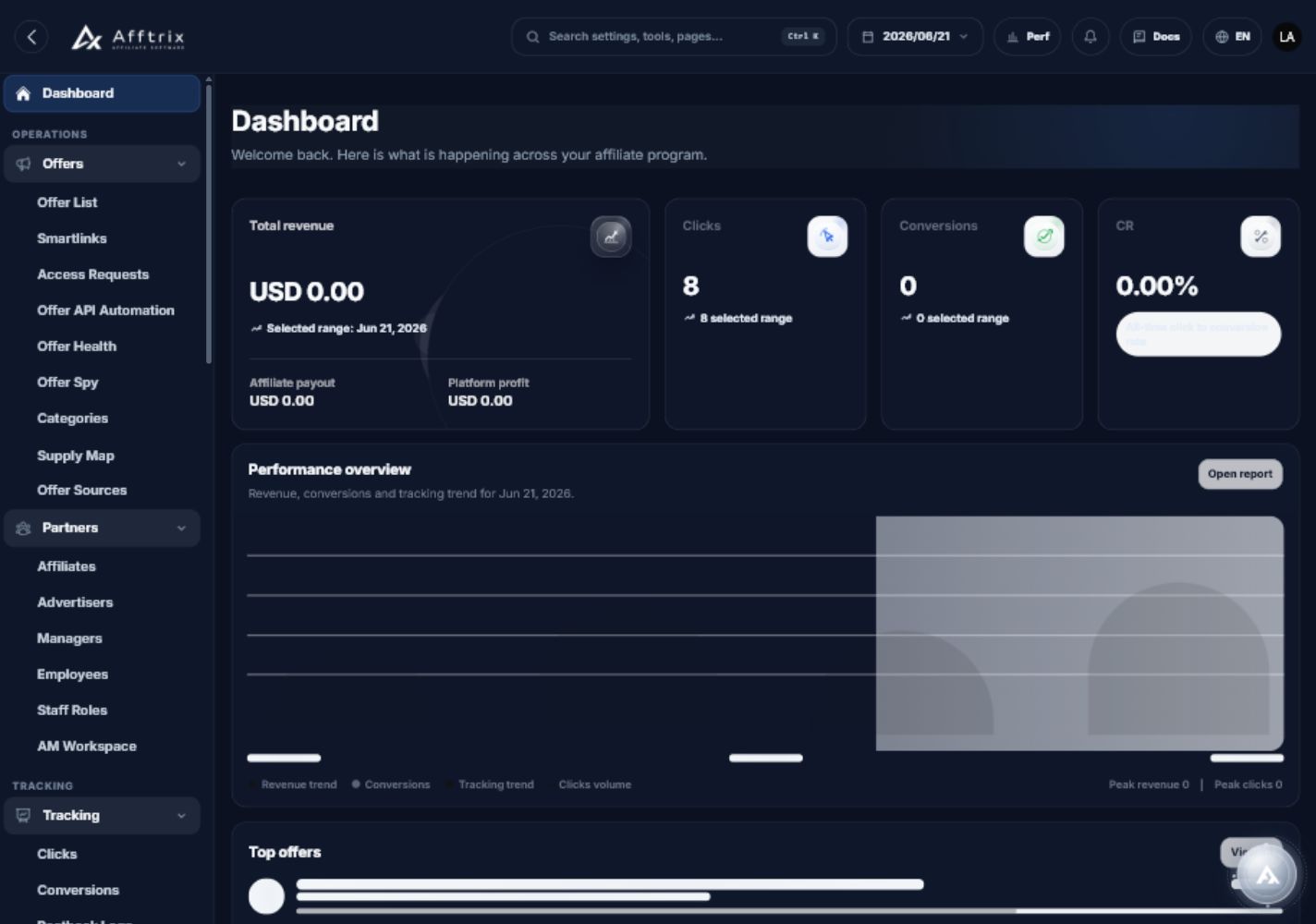
Buying affiliate software is not only a feature comparison. It is a decision about who controls the tracking layer, how quickly your team can investigate revenue disputes, and how much freedom you will have when the business changes.
Self-hosted software can provide stronger control over code, infrastructure, and data, but ownership also brings operational responsibilities. The best evaluation process tests both sides before a contract is signed.
Start with your operating model
Before opening a demo, document how your network actually works. List the people who manage offers, affiliates, advertisers, tracking, finance, support, and infrastructure. Then map the tasks that cross those teams.
Useful questions include:
- Who creates and approves offers?
- Who can change revenue and payout values?
- How are missing conversions investigated?
- Which team approves affiliate payments?
- Which events must be visible in an audit trail?
- Who will deploy updates and monitor queues, storage, and backups?
A product may have a long feature list and still create friction if it does not match these daily responsibilities.
Verify the tracking chain end to end
Tracking should be evaluated as a chain rather than a single dashboard metric. A click needs a durable identifier. That identifier must travel through redirects, landing pages, advertiser systems, and conversion callbacks. The final conversion should preserve enough context to explain revenue, payout, status, and partner attribution.
During a demo, test a complete path:
- Create or select an offer.
- Generate an affiliate tracking link.
- Open the link with sub IDs or campaign parameters.
- Confirm the click record contains the expected data.
- Send a test conversion or postback.
- Inspect the conversion, advertiser response, and affiliate callback.
- Change a status and confirm the reporting and payout effects.
Do not accept a successful redirect as proof that the whole system works. The valuable evidence appears when something fails and an operator can see where it failed.
Inspect postback debugging, not just postback setup
Most platforms can store a postback URL. The more important question is whether your team can troubleshoot it without searching raw server logs.
A useful postback workflow should expose the incoming parameters, mapped fields, response code, response body, timestamp, retry state, and related click or conversion. Sensitive actions such as retries should be permissioned and logged.
Ask the vendor to demonstrate an intentionally broken callback. A controlled failure reveals more about support quality than a perfect happy-path demo.
Review financial controls
Affiliate operations eventually become finance operations. Revenue, payout, profit, conversion status, refunds, reversals, invoices, and paid records must remain consistent.
Test how the system handles:
- Different revenue and payout models
- Manual adjustments with notes
- Approved, pending, rejected, and reversed conversions
- Minimum payout thresholds
- Single and batch payment records
- Invoice evidence and exports
- Reconciliation against advertiser statements
The system should make it difficult to pay an amount that cannot be traced back to reviewed conversion data.
Confirm what source-code ownership includes
“Source code included” can mean very different things. Clarify the license before treating the product as an owned platform.
Confirm in writing:
- Whether the purchased version can be used perpetually
- How many businesses and production installations are allowed
- Whether code modification is permitted
- Whether third-party resale or redistribution is restricted
- How long updates and standard support are included
- What happens when the update and support period ends
A perpetual license should not silently become a time-limited runtime license. If renewal is optional, the agreement should state that the installed version continues to run and renewal is only needed for future updates or support.
Evaluate infrastructure responsibility
Self-hosting transfers control to your business, but it also transfers responsibility. Review the expected web server, database, queue, cache, cron, mail, object storage, SSL, backup, and monitoring setup.
Ask for a deployment checklist and a recovery checklist. A reliable vendor should be able to explain installation, scheduled jobs, queue workers, file permissions, update order, rollback planning, and backup verification.
If your team does not want to manage this work, compare a managed private hosting option. It can preserve a dedicated deployment while moving routine infrastructure work to a service provider.
Test permissions and auditability
Affiliate networks contain commercially sensitive data. Not every employee should be able to change payouts, reveal advertiser paths, export payment details, or retry callbacks.
Review staff roles at the action level. Test whether the system records important changes and whether a manager can investigate who changed what and when. Also check how affiliate and advertiser portals isolate data between accounts.
Plan migration before choosing a launch date
Migration quality depends on the source data. Export samples of affiliates, advertisers, offers, conversions, payments, postbacks, and tracking domains before requesting a timeline.
Create a mapping document for legacy IDs and statuses. Decide which historical records must remain interactive and which can be archived. Most importantly, plan how existing tracking links and domains will behave during cutover.
Compare total operating cost
A one-time license is not the same as zero operating cost. Include hosting, backups, email delivery, monitoring, security maintenance, internal engineering time, optional support renewal, and custom development.
Compare that total with SaaS fees at your expected traffic level. Self-hosting often becomes attractive when control and customization matter, but the decision should be based on a realistic three-year operating model rather than the license price alone.
A practical final checklist
Before buying, make sure your team has:
- Completed a real click-to-conversion test
- Reviewed failed postback evidence
- Tested payout and reconciliation workflows
- Read the license and renewal language
- Confirmed deployment and backup responsibility
- Reviewed roles and sensitive permissions
- Inspected API and integration requirements
- Built a migration and rollback plan
- Calculated infrastructure and maintenance cost
Afftrix is designed for teams that want a privately deployed affiliate platform with source-code access. Use the live product workflow, deployment options, and license scope as starting points, then evaluate the product against your own operating checklist.